
Gas Fireplace Won't Turn On in Atlanta, GA
No click, no flame, nothing at all when you flip the switch — usually a dead battery, a tripped safety switch, or a gas supply issue.
Atlanta collects close to 50 inches of rain a year, and that steady dampness works its way into flues, vent caps, and masonry — so moisture, not cold, is behind many of the gas fireplace calls we get here.
Atlanta's housing runs from Victorian and Craftsman houses in West End, Inman Park, and Grant Park to condo towers in Midtown and large postwar and newer homes in Buckhead. The dataset puts the median build year at 1989, so a good share of the city's gas fireplaces are decades old, and in the oldest in-town blocks many started life as coal or wood hearths later fitted with gas logs or inserts. Those conversions are where we most often find tired thermocouples, crusted pilot assemblies, and liners that no longer match the appliance sitting in front of them.
Because the fireplace only sees hard use for a few weeks of Georgia winter, trouble tends to surface the first cold evening of the season: a pilot that will not stay lit, a clicking igniter, or a faint gas smell that was not noticed in the spring. We work on gas logs, direct-vent units, and inserts across Buckhead, Midtown, Inman Park, Grant Park, and West End, and we treat any gas odor as urgent before anything else.
Any of these six warning signs mean it's time to call a technician rather than keep running the unit:
No click, no flame, nothing at all when you flip the switch — usually a dead battery, a tripped safety switch, or a gas supply issue.
The pilot lights but goes out within seconds — the classic sign of a weakening thermocouple or thermopile.
Flame burns low, flickers unevenly, or only lights on one side — often a clogged burner port or a gas pressure issue.
The igniter sparks but no flame follows — points to the pilot assembly, gas supply, or the igniter itself.
A white haze or dark soot building up on the glass, usually mineral deposits or incomplete combustion, not simple dirt.
Any gas smell needs immediate attention (see our safety guidance below); a unit that runs fine sometimes and fails other times often points to a loose connection or a failing sensor.
Many gas fireplaces use a battery-powered ignition or remote system even though they run on gas — dead batteries in the wall switch or remote are one of the most common reasons a unit "won't turn on" at all.
If the unit has no response at all, check that its dedicated switch (if wired) or breaker hasn't tripped — a simple reset resolves this more often than people expect.
If you smell gas or the pilot won't stay lit after two or three honest attempts, stop — don't keep trying to relight it. Repeated attempts on a failing safety sensor or a leak is exactly the situation those safety systems exist to prevent.
Tell us what's happening — won't light, weak flame, or a smell — and we'll give you a same-day or next-day appointment window.
A technician watches the unit actually attempt to ignite and tests the pilot, ignition, and gas supply before recommending anything.
You get a clear price before any work begins — repair, maintenance, or inspection — no surprise add-ons after the fact.
Most repairs and maintenance visits are completed in a single visit, using correctly sourced parts for your specific model.
Every unit is run through several full ignition cycles and checked for flame quality and safe shutoff before we consider the job finished.
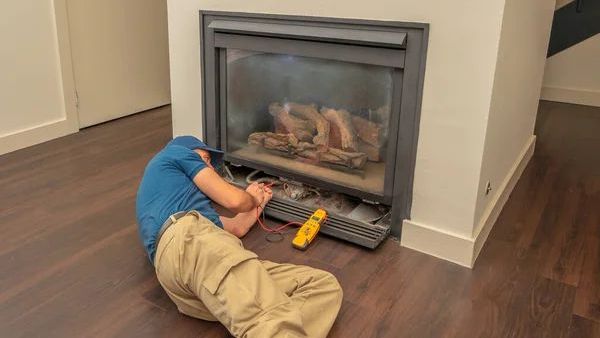
Full diagnosis and repair for a fireplace that won't turn on, won't stay lit, or is running unevenly — most fixed in one visit.
Learn More
Annual tune-up and safety check that catches small problems — a fouled pilot, a dirty burner, a weak battery — before they turn into a no-heat call.
Learn More
A full safety and function inspection — gas connections, venting, carbon monoxide safety, and flame quality — with a plain-language report on what you actually need.
Learn More
Burner, pilot, and glass cleaning that clears soot buildup and restores a clean, bright flame — done safely without damaging ceramic glass or gaskets.
Learn More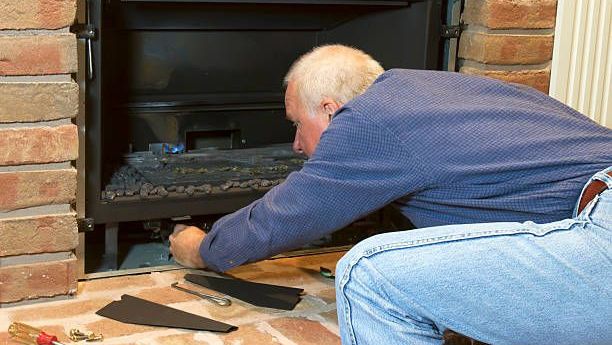
Fixing pilot lights that won't stay lit, ignition failures, and clicking-but-not-lighting units — including thermocouple and thermopile replacement.
Learn More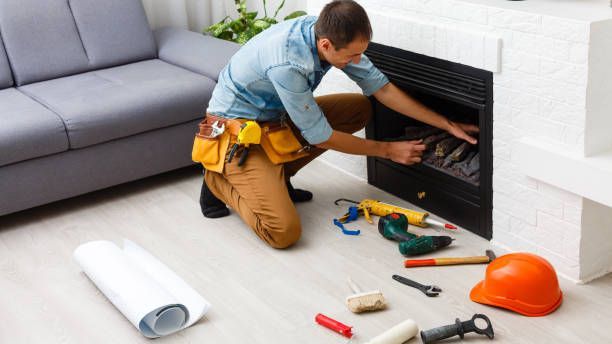
Repair for gas fireplace inserts — the sealed units installed into an existing masonry fireplace — including blower, glass, and gasket issues specific to insert designs.
Learn More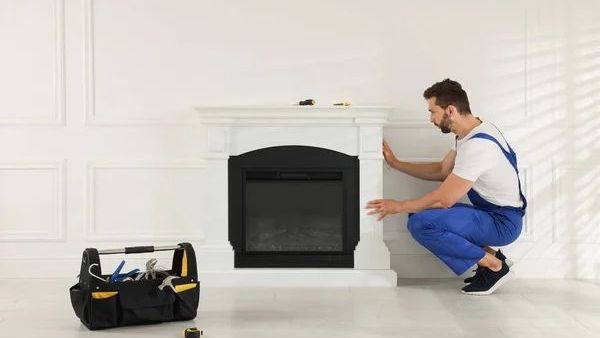
Fixing wall switches, remote controls, and blower fans that stop responding — the controls that let you actually run the fireplace day to day.
Learn More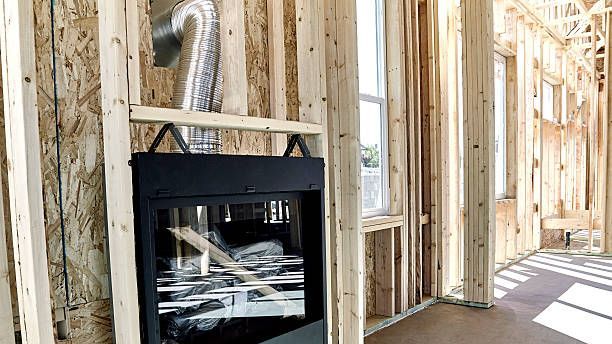
Locating the source of a gas smell or suspected leak at the fireplace, valve, or line connections — a safety-first visit, never a wait-and-see situation.
Learn MoreAtlanta's 1991-2020 average of roughly 49.7 inches of precipitation is well above what drier parts of the country see, and it arrives year-round, with late winter and July among the wettest stretches. For a gas fireplace that matters in a few concrete ways. Water gets into chimney crowns and unlined masonry, then drips onto a burner or control compartment. Rain finds the gaps around a rooftop vent cap or a wall termination, and the vent pipe behind it slowly corrodes. Warm, wet spring air also condenses inside a cold firebox, leaving rust on grates, screens, and the pilot assembly. We check for moisture staining, rust flakes, and waterlogged insulation before we touch a valve, because a burner that has been damp for months rarely lights the way it should.
Most fireplace repairs cost far less than people expect — we'll always tell you honestly what a visit actually needs.
| Service | Typical Price | What Affects It |
|---|---|---|
| Diagnostic visit / minor repair (pilot cleaning, switch reset) | $95–$175 | Most single-visit repair calls |
| Thermocouple or thermopile replacement | $150–$275 | Depends on part access and model |
| Annual maintenance / tune-up | $120–$220 | Full burner, pilot, and safety check |
| Gas fireplace inspection | $100–$200 | Full safety and function inspection with written summary |
| Glass and burner cleaning | $100–$180 | Depends on buildup and glass access |
| Blower motor replacement | $175–$350 | Varies by model and access |
Ranges are estimates for typical jobs in Atlanta. Final pricing is confirmed on-site before work begins.
We serve homes throughout Atlanta — including areas near Piedmont Park, Georgia Aquarium, Centennial Olympic Park, Fox Theatre, Mercedes-Benz Stadium, and Atlanta Botanical Garden.
We also serve homeowners near Marietta, GA, Sandy Springs, GA, and Decatur, GA.
First fire of the season and the pilot would not stay lit. The tech found the thermocouple corroded from a damp winter and replaced it. He also showed me the rust on the burner tray and explained why it happens here.
Smelled gas near the fireplace on a Sunday. He shut it down, tested the connections with a leak solution, and found a weeping fitting on the flex line. Replaced it and re-tested before leaving. Very calm, clear about what to do next time.
Our 1900s house has a brick fireplace with gas logs that sat unused for two years. He cleaned out the debris, checked the flue, and adjusted the burner. Flames finally look even instead of lazy and orange.
Atlanta's roughly 50 inches of yearly rain, plus humid summers, lets moisture condense inside a cold firebox and seep through vent caps and masonry. That shows up as rusted grates, screens, and pilot parts, which we clean, replace, or seal depending on how far it has gone.
Yes. Many older in-town Atlanta houses have masonry fireplaces fitted with gas logs years ago. We check the flue condition, damper position, gas connection, and burner before running the set, and we tell you plainly if something needs correcting first.
It is common. Georgia winters leave a fireplace idle for months, and dust, insects, or a damp pilot assembly show up once you finally light it. A quick cleaning and ignition check usually sorts it out before the next cold snap.
We do, keeping in mind that building rules can limit what is allowed. For anything involving venting or gas piping in a multi-unit building, we recommend confirming requirements with your property manager or HOA before we start.
The most common causes are a dead battery in the switch or remote, a tripped breaker, a pilot light that's gone out, or a failed thermocouple/thermopile safety sensor. We test each in order rather than guessing.
Most repair visits run $95–$350 depending on the issue, while an annual tune-up typically runs $120–$220. We provide a firm price before any work begins.
Once a year is standard, ideally before your heaviest-use season. Units used daily through a full winter benefit from a fall check rather than waiting until something goes wrong.
Open 24 Hours a Day, 7 Days a Week
Same-day and after-hours appointments available across Atlanta, 24/7 — call now to get on the schedule.